DEBATE - ONE OF THE CORNERSTONES OF COMMUNICATION

### 1. Did You Know That an Election Is a Debate?
Did you know that an election is a debate? Did you know that an election is a debate? A sermon or a teaching is also a debate.
### 2. The History and Meaning of Debate
Debates have been a cornerstone of communication for years on end. The Greeks are credited with being the first people to structure the system of debating. In Greek, the word “debate,” or the act of debating, means to discuss or argue. In French, however, debate means to fight or quarrel.
### 3. The Deadly Debating Cycle: Hunger, Anger, Fighting, and War
Fighting stems from anger, and anger stems from hunger. As the English saying goes, “A hungry man is an angry man.”
This creates what we call the deadly debating cycle, in which hunger leads to anger, anger leads to disagreement or arguing, arguing leads to fighting, fighting leads to killing, and killing leads to war.

### 4. Yeshua HaMashiach, Jesus Christ, and the Deadly Debating Cycle
The Lord of Glory, Yeshua HaMashiach, Jesus Christ, was also killed as a result of this deadly debating cycle. The people around Him were hungry because they had lost power to the Romans. As a result, they were poor, and their poverty contributed to their anger.
### 5. The Rejection of Jesus and the Consequences of Debate
When the people encountered Jesus, who presented a different perspective on life and declared Himself to be the Messiah, they rejected His claim, saying, “No, He cannot be the Messiah!” They nearly turned against Him. This represents the fighting stage of the cycle.
They then killed Him unjustly, representing the killing stage, which ultimately leads to war. You know, even the death of just one person in a conflict can be considered an act of war.
Fortunately, Jesus was resurrected. However, the point remains that debate, when it leads to division and conflict, is not a good sign in society.
### 6. Agreement Instead of Arguing and Fighting
If anything, we should seek to reach agreements with one another so that we never reach the stage of arguing or fighting.
Jim Nye has discussed debating further below. You can study his work to gain a deeper understanding, while keeping in mind that debating is part of life. However, it is a part of life that can be eliminated if we provide people with enough money to overcome hunger.
### 7. QSTPS: Money for Everyone and an End to Debate
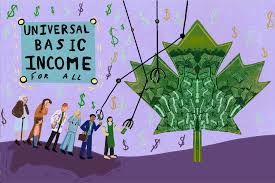
QSTPS advocates for every human being to receive more than enough money every month to meet their needs beyond measure. This would allow people to relax, create an environment of agreement, and eliminate the need for debate.
Communication would then simply involve sharing similar views, creating an atmosphere of peace, love, and harmony.
**Peace, love, and unity.**

The Origins of Formal Debate: Ancient Roots
Debate as a structured, formalized art form predates modern democracy, rooted deeply in the need for governance, persuasion, and the pursuit of truth.
* Ancient Greece (Classical Athens): The birthplace of Western debate. In the 5th century BCE, Athenian democracy required citizens to speak, argue, and vote directly on laws and policies in the Ecclesia (assembly).
( qstps note church ). This environment birthed the Sophists—teachers of rhetoric who trained young citizens in the art of persuasive speech. Philosophers like Socrates revolutionized this through the Socratic Method, a cooperative argumentative dialogue designed to stimulate critical thinking and expose contradictions. Aristotle later systematized these techniques in his seminal work, Rhetoric, categorizing arguments into ethos (credibility), pathos (emotion), and logos (logic).
* Ancient India: Debating traditions thrived in the subcontinent through philosophical discourse known as Vada (truth-seeking debate) and Jalpa (disputation aimed at winning). Ancient texts like the Charaka Samhita outline rigorous rules for academic debate (Santi) between scholars, detailing logical fallacies, methods of refutation, and criteria for victory.
* Ancient China: During the Warring States period (475–221 BCE), the Hundred Schools of Thought—including Confucianism, Daoism, and Legalism—fostered intense intellectual debate. Philosophers traveled between rival states engaging in public debates to persuade rulers to adopt their governance philosophies.
Evolution Through the Middle Ages and Enlightenment
As societies evolved, structured debate shifted from public assemblies to academic halls and legislative bodies.
* Medieval Scholasticism: In medieval European universities, debate took the form of the disputatio. Professors and students would debate a specific theological or philosophical question using strict rules of logic. One side would present a thesis, opponents would offer counterarguments (objectiones), and the master would synthesize a final resolution.
* The British Parliamentary Tradition: The rise of the modern British Parliament in the 17th and 18th centuries shaped modern political debate. The layout of the House of Commons—with opposing benches separated by a specific distance—became the physical blueprint for parliamentary debate styles used worldwide today.
The Birth of Modern Competitive Debate
The 19th and 20th centuries transformed debate from an exclusively political or academic exercise into a structured competitive sport.
* Collegiate Roots: Formal debate societies emerged in universities during the 1800s. The Oxford Union (founded in 1823) and the Cambridge Union (founded in 1815) pioneered student debate on political and social issues, establishing a global standard for British Parliamentary (BP) style.
* The American Transition: In the United States, debate moved away from oratorical declamation (reciting famous speeches) toward rigorous, evidence-based policy debate in the late 19th and early 20th centuries. The first intercollegiate debate in the U.S. took place between Harvard and Yale in 1892.
* The Cold War and Global Spread: The 20th century saw the codification of distinct international styles, such as Policy (CX) Debate, Lincoln-Douglas Debate (focusing on philosophical and moral values), and the global spread of World Schools and British Parliamentary formats.
The Digital Age and Contemporary Debate
Today, debate has expanded past physical auditoriums into digital spaces, shaping public discourse, AI development, and international diplomacy.
* Technological Shifts: The internet and online platforms have decentralized debate, allowing global populations to engage in asynchronous, cross-border discourse through forums, social media, and digital tournaments.
* Artificial Intelligence: Modern AI systems utilize debate mechanics and multi-agent reinforcement learning (such as adversarial verification and critique loops) to cross-check facts, reduce hallucinations, and improve reasoning capabilities.


Comments
Post a Comment